Unify your data, unleash your firm's AI
A purpose-built dealmaking platform for private equity that plugs into your tech stack, unifying market and proprietary data to enable AI agents to quickly source deals and provide context for each investment thesis.
A selection of our clients










"Market context integration is key to bringing Agentic AI to life."
"We’ve decided to deploy AI for process automation of tasks in the back office, document classification, and website scraping via Deal Engine to identify companies in niche sectors.”
Rory Cooke
Senior Data Analyst
“By pairing deliberate data engineering with effective AI agents, designed to source deals matching each investment thesis, firms now have a platform that evolves with their strategy—flexible, white-labelled, and fully equipped for the next decade of innovation.”
Phil Westcott
CEO, Deal Engine
The firm's data ecosystem, in one intelligent engine.
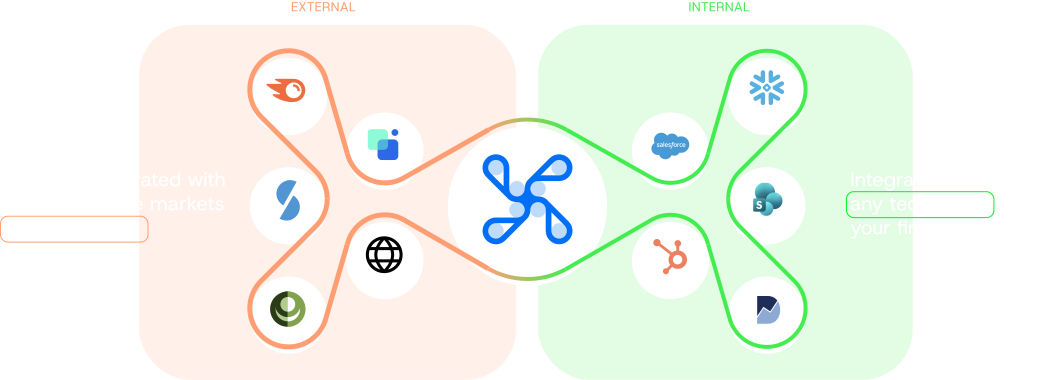
Integrate all internal and external data sources into a living, learning data engine built to optimize dealmaking and drive sustained competitive advantage for your firm.
Helping tech leadership get data in the fast lane
Our purpose-built data engine pulls together your entire market and proprietary data ecosystem, fueling your AI roadmap.
Agentic AI for PE, from origination to value creation
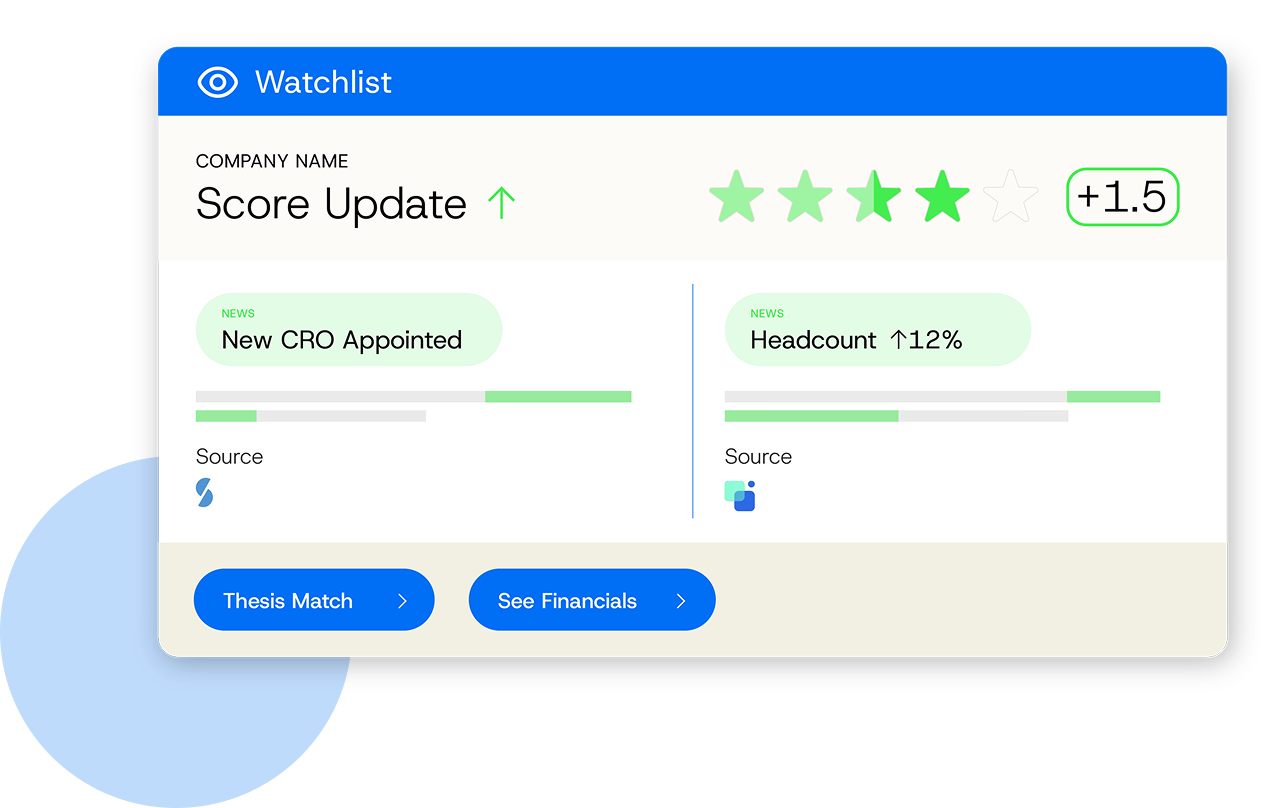
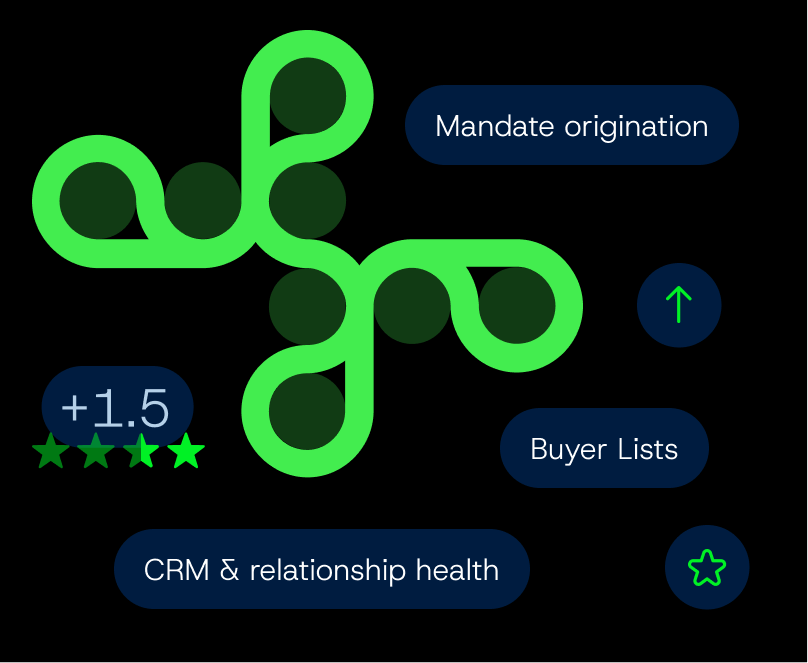
Empower origination teams with codified scoring, net-new recommendations, watchlists and tracked deals.
Connecting the unconnected in dealmaking
Unifying the data, intelligence, and signals that exist for private equity firms, and transforming it into deals.
Finally, a platform your firm can truly customize
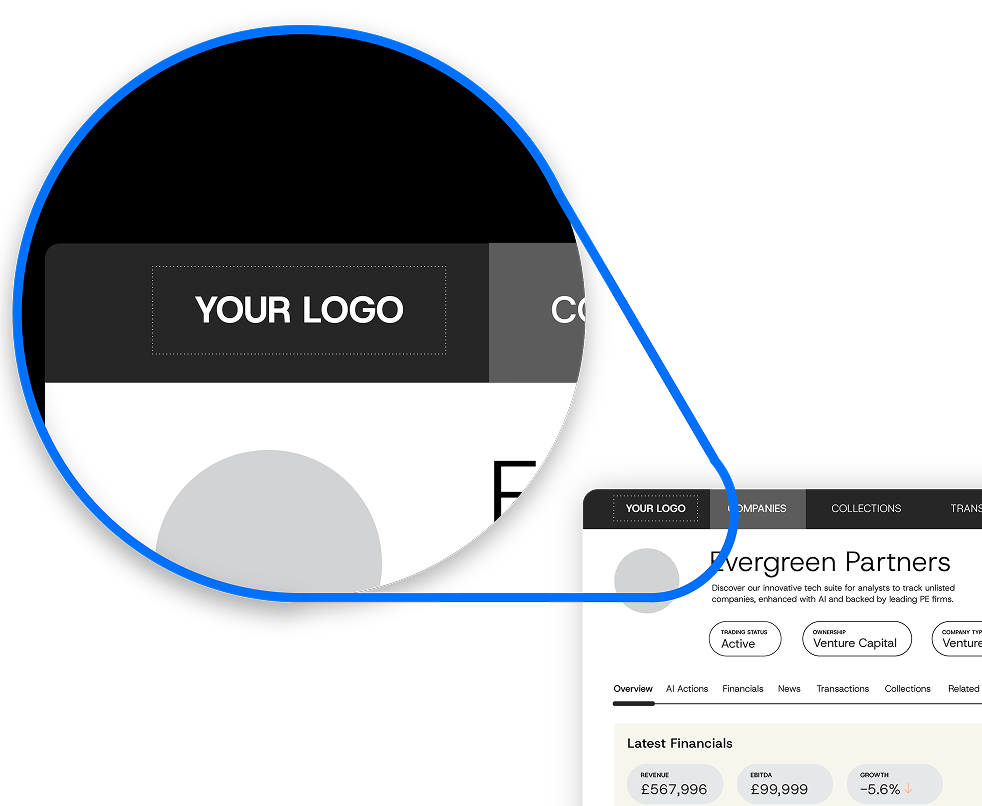
Deal Engine is offered as a white-labelled solution, resulting in faster onboarding, adoption, brand alignment and organizational buy-in.
Find more net new deals for your firm
Codify your strategy, track the market and increase relevance. Deal Engine delivers always-on agentic AI intelligence that continuously monitors your entire investable universe — specified by your thesis — and surfaces high-fit targets.
Unify data, unlock insights
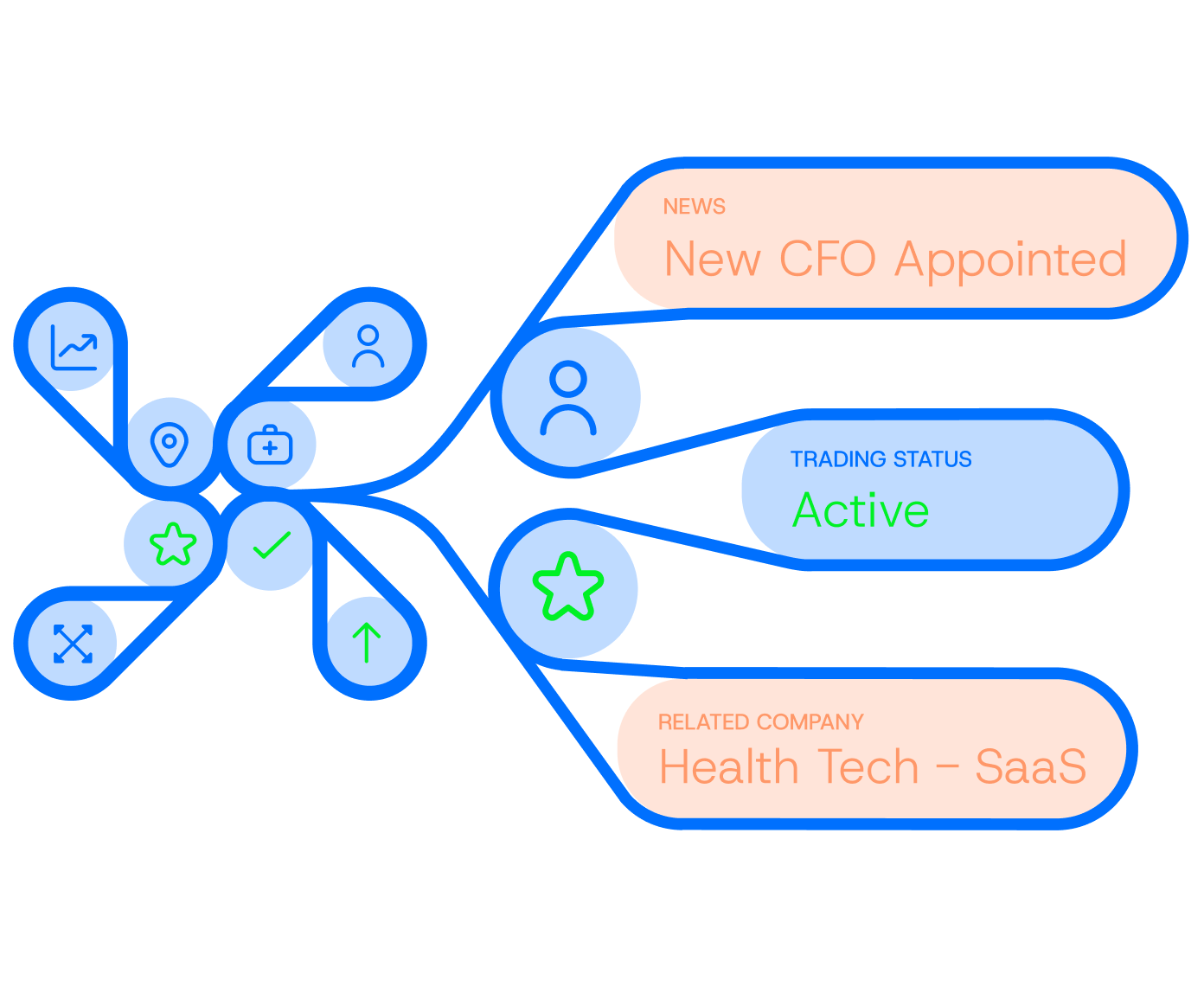
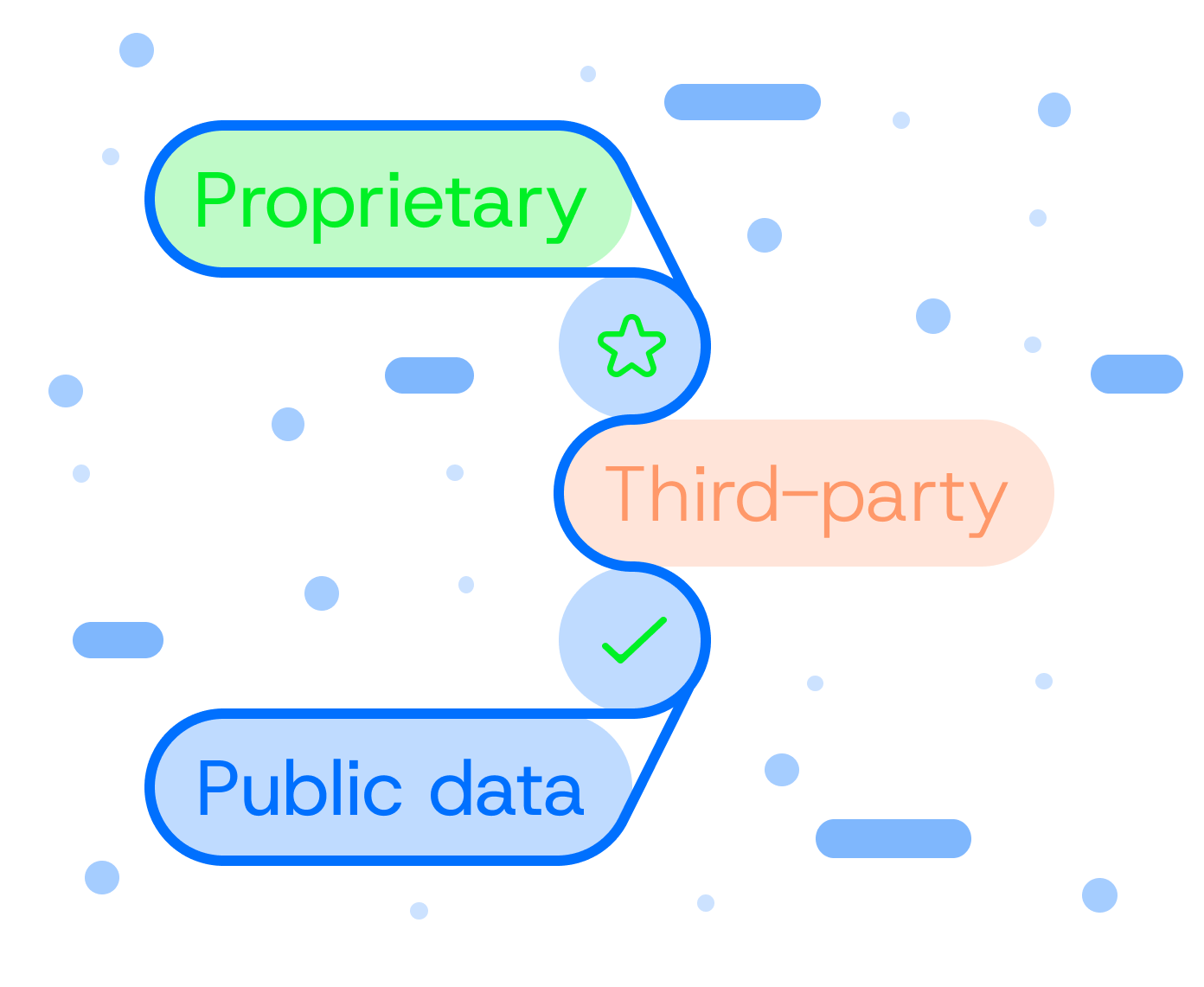
White-label the technology and make your Deal Engine entirely yours. Deal Engine brings together proprietary, third-party, and public data into a single connected layer, transforming information into actionable intelligence.
Power up instead of piling on
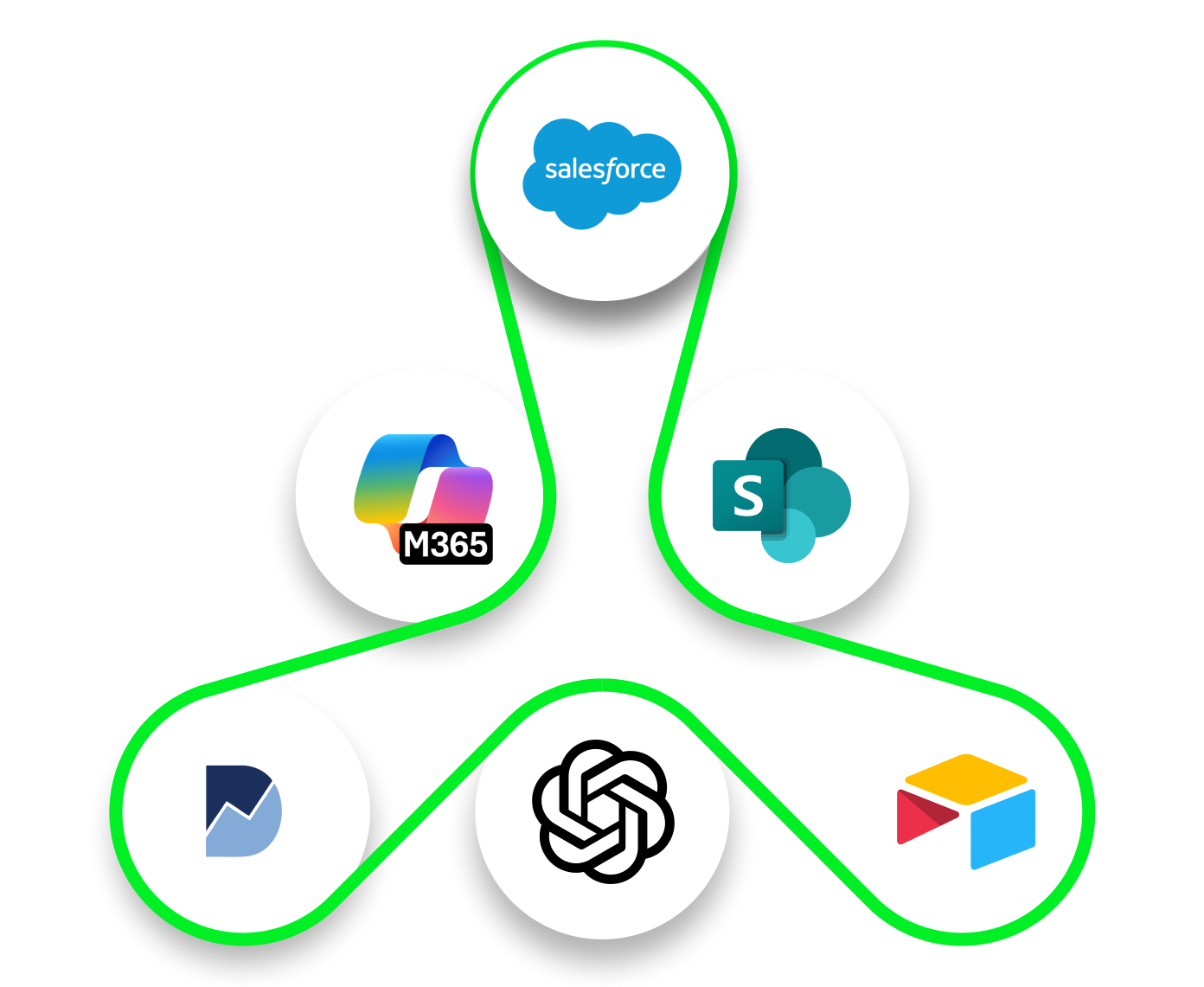
Optimize your data spend and unlock the value in your CRM and internal documents. Deal Engine enriches your CRM with structured, intelligent data without adding clutter, complimenting your existing tech stack instead of complicating it.
Build the gen AI-enabled firm of tomorrow
Fuel your AI roadmap with an integrated agentic AI intelligence layer. Accumulate and train your firm’s own proprietary dealmaking engine, built to evolve with your strategy and scale firm-wide tech-readiness.
Enabling firms to create their own edge
45M+
datapoints accumulated in a typical deployment
161
actionable insights per firm per month, on average
64
new deals on the radar in 2 months, on average
99.5%
decreased analyst time spent on manual research

Claude, context and control: how private markets firms actually scale AI
Claude is changing how work gets done Since Anthropic’s February 24 release, we’ve had a growing number of conversations with private equity and corporate finance teams asking a similar question: If Claude can now do all of this, how does the rest of our tech stack fit in? It is an understandable reaction. The introduction of “skills”, combined with a rapidly expanding set of integrations, has made Claude feel much closer to a complete working environment. You can ask for a pre-investment committee memo on a UK software asset, pull in multiple data sources, and get a structured output in seconds. You can analyse a company, build a market map, or summarise a sector without switching tools. For many teams, it feels like the end state. But what Claude has fundamentally changed is the interface. It has not replaced the underlying system required to make that work at scale. What changed with Claude on February 24 The most important shift in the February release is the move from prompting to “skills”. Previously, getting reliable outputs depended on writing increasingly detailed prompts. That approach works, but it is difficult to standardise across a team and almost impossible to operationalise at scale. Skills introduce a more structured way of working. Instead of describing a task each time, you define how it should be done once, and reuse it. The closest analogy is onboarding a new analyst. You provide guidance, examples, templates and expectations so that work is done consistently across the firm. Claude’s skills follow the same pattern. They combine: instructions that define how a task should be performed reference materials, such as previous outputs or style guides templates that shape the output a layer of code that ensures the result is consistent and usable This is a meaningful step forward. It allows firms to move from one-off interactions to repeatable workflows. At the same time, building high-quality skills is still a technical and iterative process. Getting from a good output to a reliable, firm-wide standard takes time. Why the experience feels so powerful Claude’s strength is how naturally it brings workflows together. A single prompt can produce a fully formed output that combines multiple sources. For example: building a pre-IC memo using internal documents, third-party data and web signals mapping a sub-sector and identifying relevant companies summarizing recent developments across a target pipeline For an individual user, this is transformative. It removes friction, reduces manual work, and makes complex tasks feel simple. It also starts to change expectations. If this is possible for one user, it raises the question of how this should work across an entire firm. That is where the next layer of thinking begins. How Claude connects to data Claude’s ability to operate across systems is enabled through model context protocol, or MCP. In practical terms, this allows the model to query external sources via APIs. It can pull from third-party data providers, access internal documents, and interact with systems such as CRM. This is what enables multi-source workflows in a single interaction. However, it is important to understand how those interactions behave underneath. Each time you ask a question, Claude goes out to those sources, retrieves the data, processes it, and returns an answer. It does this well, but it does it fresh each time. That means: the same company analysis may be rebuilt multiple times the same datasets may be queried repeatedly the same insights may be generated without being retained At a small scale, this is barely noticeable. At a firm level, it becomes material. Where firms start to think about structure As teams begin to use Claude more broadly, the questions naturally shift. If two people analyze the same company, should that work be done twice? If a team has already mapped a sector, should that insight be recreated each time? If signals have been identified across a pipeline, where should they live? These are not limitations of Claude. They are questions about how work is organised at a firm level. This is where many firms start introducing a context layer alongside tools like Claude. The role of a context and memory layer A context layer focuses on what happens beyond the individual interaction. Its role is to capture, structure and retain the outputs generated by tools like Claude, and make them reusable across the firm. Instead of insights sitting inside chat conversations, they become part of a shared dataset. For example: a company analysis generated once can be reused and enriched over time a market map can be updated, rather than rebuilt signals across a CRM pipeline can be tracked continuously This creates persistence, consistency and shared visibility. More importantly, it allows knowledge to compound. Over time, the firm is not just answering questions. It is building a proprietary view of the market. What about passive tasks? Another shift becomes clear as usage matures. Claude is highly effective for user-driven tasks. But many of the most valuable workflows in private markets are continuous. For example: tracking 200 companies in a CRM and surfacing the five most relevant to prioritise this week monitoring hiring, product and funding signals across a target sub-sector identifying when a previously out-of-scope company moves into scope These are not one-off queries. They require ongoing evaluation. This is where firms start defining tasks that run continuously in the background. Often described as agents, these processes monitor data, update insights and surface actions without requiring constant user input. For those workflows to work effectively, they need to connect to a structured layer where data can be stored, updated and linked over time. Managing scale: cost, consistency and control As usage expands, practical considerations follow. When multiple users are interacting with multiple data sources, it becomes important to think about efficiency and control. Without structure: similar queries may be run repeatedly across teams costs can increase quickly due to repeated API calls workflows can become inconsistent These are not issues with the model itself. They are the result of operating without a shared system. Introducing a layer that captures outputs, orchestrates workflows and manages usage helps address this. It ensures that work done once can be reused, and that activity across the firm is aligned. How Deal Engine fits into this picture Within this architecture, Claude and Deal Engine play complementary roles. Claude becomes the interface. It is where users ask questions, generate outputs and interact with data. Deal Engine sits alongside it as the context and orchestration layer. It captures the outputs generated by Claude, structures them into a reusable dataset, and connects them to existing systems such as CRM. It also enables continuous workflows, such as sourcing and CRM monitoring, to run in the background. In practice, this means: analysis is not repeated unnecessarily insights are shared across the firm workflows become consistent and scalable knowledge builds over time PE origination isn't as binary as just "Yes" or "No"; There's a big 3rd category, "Not Yet". This is where the importance of passive tasks should not be underestimated Build or adopt: different approaches to the same challenge At this point, firms typically consider how to implement this type of architecture. One option is to build internally, using platforms such as Snowflake or Databricks alongside custom connectors and workflows. This offers flexibility, but requires ongoing investment in engineering and maintenance. Another option is to adopt a platform designed for this purpose, with data structures, workflows and orchestration already in place. Whichever route is taken, the key point remains the same. The model is only one part of the system. Bringing it together Claude represents a significant step forward in how private markets teams interact with data and perform analysis. It simplifies workflows, improves productivity, and opens up new possibilities for how work can be done. At the same time, scaling those capabilities across a firm requires a complementary layer that captures, structures and builds on what Claude produces. Together, these layers form a more complete system. One that not only helps teams work faster in the moment, but also builds a lasting, compounding view of the market over time, where passive tasks are happening 24/7. That is where the real advantage begins to emerge. Book a demo to learn how Deal Engine can help you embed a modern data infrastructure built for private equity in 2026 and beyond. Find out more about how Deal Engine helps dealmakers.
New guide: Why every private equity firm needs a proprietary market data engine
Originally published in October 2025, this updated March 2026 edition reflects the market’s shift from AI experimentation to building the data infrastructure required to unlock value from Frontier AI models such as Claude. It introduces the Deal Engine framework and expands practical guidance for creating the proprietary context, institutional memory and integrated data foundations that allow private equity firms to apply these models effectively. Inside the guide Private equity is standing at the edge of its next competitive frontier, and our latest guide, Why every private equity firm needs a proprietary market data engine, explores how firms can get there. Drawing on data from the AI Pathfinder Private Equity Benchmark Survey (September 2025), the guide reveals that 47.8% of firms are still only piloting AI tools, while fewer than 11% have achieved true scale. Most have already invested in the plumbing. They have CRMs, market data platforms, and analytics tools. What they have not done is connect any of it into a single, context-driven intelligent system that learns and improves over time. That is the opportunity the guide unpacks. How leading firms are turning their datasets, CRMs, and proprietary knowledge into a unified data engine that shifts deal teams from reactive to proactive, spotting opportunities earlier, identifying relationship inroads, and building faster conviction. This updated guide distills insights from work with leading firms to give deal, portfolio, and data teams a practical playbook for what is next. Inside, you will find: What a PE data engine is, and what it is not How to buy, build, or "build with", and why "with" wins Best practices for deployment, adoption, and measuring success Real benchmarks from the AI Pathfinder Private Equity Benchmark Survey From reactive deal flow to proactive origination Too many deal teams are still waiting for deals to come to them. They respond to inbound flow, work from static target lists, and chase opportunities that are already in market. The firms pulling ahead have flipped that model. They are systematically hunting against defined criteria, picking up live signals, and reaching founders before a process ever begins. Making that shift requires more than better data subscriptions. It requires infrastructure. Signals around leadership changes, hiring spikes, new certifications, and facility expansions need to surface automatically and in context, rather than sitting buried across disconnected platforms. When those triggers are unified into a single operating layer, deal teams stop missing the moments that matter. From data abundance to deal advantage The industry's leading data providers have reshaped how dealmakers source and qualify opportunities. But with so many firms licensing the same high-quality datasets, access alone no longer creates differentiation. The next edge will come from how firms engineer, orchestrate, and apply intelligence to that data. A market data engine makes this possible by connecting internal systems and third-party sources, enriching them, and surfacing the most relevant opportunities in real time. As Phil Westcott, Founder and CEO of Deal Engine, puts it: "AI will not create advantage on its own. Proprietary, well-engineered context will. Firms that build a true data engine today are building the institutional memory and architecture that tomorrow's AI will depend on." The infrastructure gaps that cause firms to miss deals Most firms are closer to this than they think, but common gaps in their current setup are costing them deals. Fragmented relationship data. Key intel sitting in individual inboxes or spreadsheets rather than a unified system means lost visibility into founder and advisor relationships. Weak signal tracking. Without automated monitoring for hiring trends, leadership changes, or revenue inflections, firms miss companies that are quietly becoming ready to transact. Disconnected data and CRM. When market intelligence and relationship history live in separate tools, deal teams spend time reconciling systems instead of building conviction. No standardised workflow. Inconsistent processes across team members mean dropped follow-ups, duplicated outreach, and institutional knowledge that walks out the door. A data engine closes these gaps. Not by adding more tools, but by connecting what already exists into a governed, compounding system. The future is intelligent deal origination The AI Pathfinder data shows clear momentum. Nearly half of all firms are actively piloting AI, yet most are stalling because of architecture rather than ambition. Over half rate their data as adequate for pilots but not scalable. The firms that pull ahead will not be those with access to the best models. They will be those with the best proprietary intelligence behind them. The firms that act now will identify better deals, make faster decisions, and build lasting competitive advantage across the investment lifecycle. Download the guide to see how.
What data infrastructure really means in PE
By Alex Bajdechi, VP of Sales, Deal Engine As private equity firms progress through 2026 and looking beyond, “data infrastructure” is becoming one of the most commonly used (and least consistently defined) terms in the industry. For some, it means better reporting. For others, it means a new CRM, a handful of third-party data feeds, or a dashboard layered on top of existing systems. In reality, modern data infrastructure is something far more comprehensive: a unified, intentional way of organizing, structuring, and activating institutional context and knowledge across the entire investment lifecycle. The expanding universe of data sources Today’s private equity firms are surrounded by data. Proprietary sources include internal documents, CRM records, relationship intelligence, expert network notes, portfolio insights, and years of institutional memory locked inside inboxes and spreadsheets. Third-party providers, such as Preqin, SourceScrub / Grata, Pitchbook, and Gain.pro - add structured market coverage and comparables. On top of that sits a constantly shifting layer of public data: web pages, press releases, filings, RSS feeds, hiring signals, product launches, and social activity. Each of these sources has value on its own. The challenge is that they rarely talk to one another, and context is often lost. Where most firms are today Most firms are still in the early stages of understanding and organizing their proprietary context and data. Some have taken meaningful steps, architecting purchased data feeds, deploying survivorship rules, or standardizing how information flows into their CRM with entity matching and orchestration. These are important foundations, and they shouldn’t be understated. But even among sophisticated firms, these efforts tend to exist in silos. Proprietary context lives in one place. Third-party data lives in several disparate locations. Public signals are monitored informally, if at all. The missing connective tissue Very few firms have fully threaded these data sources together, conceptually or technically. Fewer still have done so with a deliberate focus on architecture, growth, and workflow. That’s the difference between having data and having data infrastructure. True infrastructure ensures that information is continuously ingested, contextualized, de-duplicated, and made actionable across sourcing, diligence, and relationship management. It’s what allows firms to move faster without sacrificing judgment and navigate the ever changing AI landscape with confidence, and governance. Bringing the vision to life with Deal Engine This is where Deal Engine is uniquely positioned. We’ve productized what has historically been a painful, bespoke process, helping firms unify proprietary, third-party, and public data into a single, intelligent system designed around how modern deal teams actually work. The result isn’t just better data. It’s better decisions, better prioritization, and a platform that scales with the firm with trusted AI governance. Book a demo to learn how Deal Engine can help you embed a modern data infrastructure built for private equity in 2026 and beyond. Find out more about how Deal Engine helps dealmakers.
Intapp Amplify 2026: the new dealmaker's edge
What private markets leaders are learning about AI, data, and the next phase of dealmaking Deal Engine was proud to sponsor Intapp Amplify this year, with members of our team attending both the New York and London events. Across the two conferences, Alex Bajdechi, Steven Kolatac, Phil Westcott, Martin Pomeroy, Sven Hansen and Matthew Kordonowy joined discussions with private markets and technology leaders and partners about how CRM, data infrastructure and AI are evolving across the industry. This team has worked closely with firms running Intapp DealCloud for many years. That perspective made the conversations across Amplify particularly interesting, as the industry begins to move from experimenting with AI tools towards building the infrastructure that allows AI to operate effectively. A major focus of the event was Intapp Celeste, Intapp’s new agentic AI layer designed to coordinate AI agents across the private markets workflow. Celeste enables firms to move beyond humans manually operating software interfaces and towards a model where professionals instruct AI agents to complete tasks across their technology stack. In practice, this means agents can interact with systems such as Intapp DealCloud to monitor signals, capture opportunities and automate operational processes. In this best practice architecture, Deal Engine can provide the integrated market data to the DealCloud environment, the combination forming a firm-owned contextual layer to feed these agents. Across sessions and conversations with clients, partners and technology leaders, several consistent themes emerged. 1. AI advantage is shifting from models to context The advantage lies in the proprietary market context that those models interrogate. For private markets firms, that context includes their (i) procured market data, (ii) their market context scraping, (iii) their proprietary notes and insight stored in their DealCloud, (iv) their proprietary sourcing history and rationale, (v) their evolving investment thesis and (vi) internal institutional knowledge in their Document Management systems Many conversations centered on how firms can better integrate and govern this context so that AI can interrogate and drive agentic workflow in a meaningful way. 2.Infrastructure thinking is replacing point tools Another recurring discussion was the move away from adding more standalone tools. Over time many firms have accumulated complex technology stacks, with different systems managing research, deal flow, market data and internal processes. While each tool serves a purpose, the overall result can be fragmented workflows and disconnected data. The focus is now shifting towards infrastructure. Firms are thinking more about how their systems and data connect together to form a coherent operating environment that AI can work across. 3. Investment strategy needs to be codified Several conversations focused on how investment strategy is represented inside technology systems. Historically, investment theses have often existed as narrative documents or presentations. Increasingly, firms are looking at how those strategies can be translated into the signals and intelligence so that the Frontier AI technology can interpret the market and surface opportunity. When investment criteria, sector focus and deal characteristics are “bottled” into the intelligence infrastructure, of a firm, the trained agents can guide sourcing workflows, highlight relevant opportunities and support AI driven analysis. 4. Data governance is becoming central to AI strategy Data governance was another major theme across the event. Reliable AI outputs depend on reliable inputs. As firms introduce more AI driven capabilities, questions around data structure, permissions and oversight become increasingly important. Rather than being treated purely as an operational issue, governance and data architecture are becoming core parts of long term AI readiness. 5. AI is supplementing relationship driven deal origination There was strong agreement that AI will not replace the relationship driven nature of private markets. Instead, the focus is on supplementing existing sourcing approaches and finding the right balance. Relationship networks and inbound opportunities remain essential, but firms are increasingly augmenting these with thesis driven intelligence that can surface opportunities earlier and more consistently. The goal is not to remove the human element of dealmaking, but to give deal teams better context, more leverage and prioritize where they are spending their time. 6. The shift from operating software to directing AI systems One of the more forward looking themes discussed was how professionals may interact with software in the future. Rather than manually operating multiple applications, the emerging model is one where professionals increasingly instruct AI systems to carry out tasks across those tools on their behalf. Technologies such as Intapp Celeste reflect this direction of travel, where AI can coordinate activity across different applications while keeping the human in control of the outcome. For private markets firms, this could gradually reshape how research, origination and internal workflows are managed. The direction of travel for private markets technology Taken together, the conversations across the New York and London Amplify events pointed to a clear direction of travel. Frontier AI is advancing quickly, but the firms seeing the most value are those focusing on the foundations. Integrating data, structuring institutional knowledge and ensuring governance across systems are becoming critical steps in making AI useful in practice. For private markets firms, the most valuable assets remain their people and the knowledge they accumulate over years of investing. When that knowledge is coalesced within a well designed architecture, the organization stands to gain an exponential benefit in future years. Thank you to the Intapp team for hosting two fantastic market events! The conversations at Amplify made one thing clear: firms that structure and integrate their market intelligence today will be best positioned to unlock AI tomorrow. Speak with our team to learn more.
Be first to every deal.
See Deal Engine in action.
Discover how Deal Engine is providing private equity firms with the data engineering and AI capabilities fueling their competitive advantage.